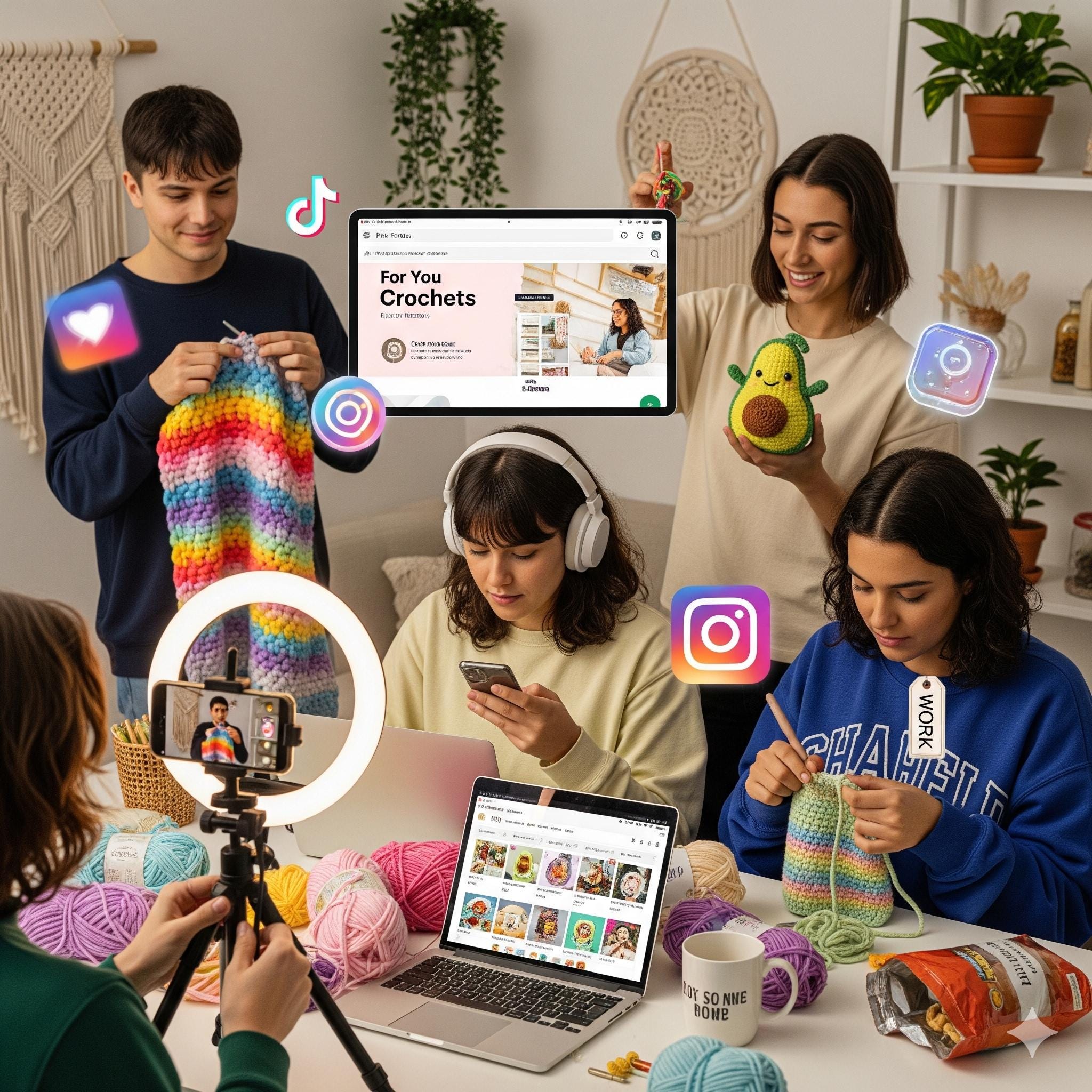
Picture this: It's 2 AM, and millions of young people worldwide are hunched over their phones, not scrolling through TikTok mindlessly, but following along with a crochet tutorial. They're making bucket hats, crop tops, and granny square bags while their parents sleep, wondering when their digitally-native kids became obsessed with what used to be called "grandma's hobby." Welcome to the crochet revolution – where rebellion comes with a hook and yarn, and where the most anti-establishment thing you can do is... make your own clothes.
The Numbers Don't Lie: Crochet Has Gone Completely Viral
Let's start with some jaw-dropping statistics that prove this isn't just a passing trend. On TikTok alone, crochet content has amassed an astonishing 15.5 billion views. To put that in perspective, that's more views than most major movie franchises generate across their entire marketing campaigns. The crafting boom exploded during the pandemic when Google searches for terms like "crochet" and "sewing" skyrocketed worldwide in April 2020. But while other pandemic hobbies faded (RIP, sourdough starters), crochet not only stuck around – it evolved into a full-blown cultural phenomenon. Walk into any craft store today, and you'll see something that would have been unthinkable five years ago: teenagers and twenty-somethings dominating the yarn aisles, phones out, comparing colors to Pinterest boards, and debating the merits of different hook sizes with the expertise of seasoned crafters.
The Perfect Storm: How a Global Crisis Created a Craft Revolution
The pandemic didn't just give Gen Z time to pick up new hobbies – it fundamentally changed how they think about consumption, creativity, and connection. While locked in their rooms, this generation discovered something their parents had forgotten: the profound satisfaction of making something beautiful with your own hands. But here's where it gets interesting. Unlike previous generations who might have learned to crochet from grandmothers or craft circles, Gen Z learned from their phones. There has been a deluge of crafting content on TikTok, YouTube, Pinterest and Instagram, as crocheting and knitting shed the senior stereotype and emerge as fashion's newest fad among Gen Z. This digital learning approach transformed crochet from a quiet, solitary activity into a shared, social experience. Suddenly, making a granny square wasn't just about the square – it was about the journey, the community, and yes, the content.
The Anti-Fast Fashion Rebellion: Punk Rock with Yarn
Here's where Gen Z's crochet obsession gets revolutionary. Crochet started trending because it has the same pull and attraction as thrifting does, which is also incredibly trendy amongst Generation Z. Making your own clothes is a form of sustainable slow fashion. But this goes deeper than just environmental consciousness. Gen Z has watched fast fashion destroy the planet while creating a culture of disposable everything. Their response? Learn to make clothes that literally cannot be mass-produced. Here's a secret the fashion industry doesn't want you to know: genuine crochet cannot be replicated by machines. When you see "crochet-style" items from fast fashion brands, they're actually machine-knitted imitations. Real crochet requires human hands, human creativity, and human time. It's the ultimate middle finger to the fast fashion machine. What these traditional crafts offer is not only a chance to slow down, but to subtly rebel against a destructive culture of overconsumption. When it takes weeks - if not months - to craft a new item, that item becomes much more valuable. Imagine wearing a top that took you 20 hours to make versus one that was manufactured in 20 minutes. Which one are you more likely to treasure, repair, and keep forever?
The "Grandma Activities" Renaissance: Reclaiming Traditional Skills as Radical Acts
With the rise of social media, interest has grown in what many call "grandma activities" — including baking, puzzles, gardening and, most notably, crocheting and knitting. But calling them "grandma activities" misses the point entirely. Gen Z isn't appropriating their grandmothers' hobbies – they're reclaiming skills that were nearly lost to industrialization and digital overwhelm. In a world where everything is instant, automated, and artificial, crochet represents something radically different: slow, intentional, and authentically human. Consider this: your great-grandmother probably knew how to mend clothes, grow food, and create household items from scratch. Your grandmother might have retained some of these skills. Your parents likely lost most of them. And now Gen Z is desperately trying to learn them back from YouTube tutorials. This isn't nostalgia – it's survival. In an increasingly uncertain world, knowing how to create and repair things with your own hands isn't quaint; it's practical.
The Psychology of the Hook: Why Crochet Hits Different for Digital Natives
There's something almost magical about what happens when a generation raised on instant gratification discovers an activity that demands patience, presence, and practice. The psychological benefits are profound and perfectly suited to Gen Z's specific struggles.
The Antidote to Digital Overwhelm
Gen Z is the first generation to grow up entirely in the digital age. They've never known a world without smartphones, social media, and constant connectivity. The result? Unprecedented levels of anxiety, depression, and digital fatigue. Crochet offers something their screens cannot: tangible progress. Every stitch is real, physical, permanent. You can't delete it, you can't scroll past it, and you can't consume it passively. You have to participate actively in creating something that exists in the physical world. The repetitive motion of crochet also triggers what researchers call a "relaxation response" – the same physiological state achieved through meditation. But unlike traditional meditation, which many young people struggle with, crochet meditation produces something useful at the end.
The Perfect Blend of Individual and Community
Gen Z craves authentic connection, but they're also fiercely independent. Crochet perfectly balances these seemingly contradictory needs. You create alone, but you share the results. You follow patterns, but you choose your own colors and modifications. You're part of a community, but you're not dependent on others to participate. This collective enthusiasm seen on social media not only fuels the craft's popularity but also establishes a vibrant, supportive community that thrives on creativity and collaboration. The crochet community online is notably different from other social media spaces. It's supportive rather than competitive, instructional rather than performative, and inclusive rather than exclusive. In a social media landscape often characterized by toxicity and comparison, crochet spaces offer genuine encouragement and skill-sharing.
The Economics of Rebellion: Why Making Your Own Clothes is Revolutionary
Let's talk money – because Gen Z's financial reality is driving much of their interest in DIY culture. The average Gen Z person faces:
- Student loan debt averaging $37,000
- Housing costs that consume 40%+ of income
- Stagnant wages despite rising costs of living
- Fast fashion prices that seem cheap but add up quickly
Now consider the economics of crochet:
- Initial investment: $20-30 for hooks and basic supplies
- Cost per garment: $15-40 depending on yarn choice
- Time investment: 10-40 hours depending on complexity
- Longevity: Properly made crochet items can last decades
When you're paying $25 for a fast fashion top that might fall apart after five washes, spending $30 on yarn to make something unique, durable, and perfectly fitted starts looking like genius-level financial planning. But there's another economic angle: the side hustle potential. Many Gen Z crocheters have turned their hobby into income streams, selling finished pieces, patterns, or tutorials. In a gig economy, having a skill that produces sellable goods is incredibly valuable.
Fashion Revolution: How Crochet Became the Ultimate Style Statement
Crochet and knitwear offer unique designs: Each piece offers a one-of-a-kind look, perfect for those who want to stand out. In an era of algorithmic fashion recommendations and mass-produced "individuality," true uniqueness has become incredibly rare and valuable. In 2024, crochet wearables are not only trendy but also a statement of individuality and sustainability, perfectly aligning with Gen Z values of self-expression and environmental consciousness. But here's what's really interesting: Gen Z has completely reimagined what crochet can look like. Gone are the days when crochet meant doilies and afghan blankets. Today's crochet fashion includes:
- Streetwear-inspired bucket hats and beanies
- Y2K-revival halter tops and mini skirts
- Avant-garde sculptural pieces that blur the line between fashion and art
- Functional items like phone cases, tote bags, and laptop sleeves
- High-fashion interpretations of traditional techniques
This isn't your grandmother's crochet – it's crochet reimagined through the lens of a generation that refuses to be put in boxes.
The Content Creation Goldmine: Why Crochet is Perfect for Social Media
From a pure content perspective, crochet is social media gold. It offers:
Visual Satisfaction
The transformation from yarn to finished piece is inherently satisfying to watch. Time-lapse videos of crochet projects regularly go viral because there's something mesmerizing about watching chaos become order, strand by strand.
Educational Value
Tutorial content performs incredibly well on platforms like TikTok and YouTube. People genuinely want to learn, and teaching crochet provides value while building followings.
Before and After Drama
The contrast between a ball of yarn and a finished garment provides natural drama that algorithms love.
Accessibility
Unlike other crafts that require expensive equipment or dangerous materials, crochet is relatively safe and accessible, making it perfect for creators of all ages and backgrounds.
Community Engagement
Crochet content naturally encourages comments, questions, and sharing, driving the engagement that social media platforms prioritize.
The Deeper Cultural Shift: What Crochet Represents for Gen Z
The crochet phenomenon isn't really about crochet at all – it's about a generation trying to reconnect with authenticity, sustainability, and meaning in a world that often feels superficial, wasteful, and purposeless.
Rejecting Hustle Culture
While millennial culture was obsessed with optimization and productivity, Gen Z's embrace of crochet represents a rejection of hustle culture. Crochet can't be optimized or hacked. It takes the time it takes. It requires presence, not productivity.
Embracing Imperfection
Gen Z grew up with Instagram perfection and Photoshop reality. Crochet, with its inevitable wonky stitches and human imperfections, offers a refreshing alternative to digital perfection.
Valuing Process Over Product
While consumer culture focuses on having things, crochet culture celebrates making things. The journey becomes as valuable as the destination.
Creating Instead of Consuming
In a world designed to turn people into consumers, choosing to become creators is inherently radical. Every hour spent crocheting is an hour not spent buying things.
The Skills Gap: Why Traditional Crafts Feel Revolutionary
There's a profound irony in the fact that skills our great-grandparents took for granted now feel revolutionary to young people. This represents a massive cultural shift that goes beyond fashion trends. Gen Z is rediscovering that:
- Making things feels better than buying things
- Slow processes can be more satisfying than fast ones
- Physical creation provides mental benefits that digital creation cannot
- Traditional skills offer modern solutions to contemporary problems
This isn't just about crochet – it's about a generation realizing that some old ways of doing things might actually be better than new ways.
The Future of the Crochet Revolution
So where does this go from here? Several trends suggest this isn't just a phase:
Educational Integration
More schools are bringing fiber arts back into their curricula, recognizing the cognitive and emotional benefits.
Therapeutic Applications
Mental health professionals are increasingly recommending crochet as a form of therapy for anxiety, depression, and ADHD.
Sustainable Fashion Movement
As environmental concerns intensify, skills like crochet become more valuable, not less.
Economic Uncertainty
In uncertain economic times, practical skills that can save money or generate income become more appealing.
Digital Detox Culture
As awareness of technology addiction grows, activities that require presence and focus become more valued.
The Unexpected Life Lessons Hidden in Every Stitch
Perhaps the most profound aspect of Gen Z's crochet obsession isn't what they're making, but what they're learning: Patience: In a world of instant everything, crochet teaches that some things cannot be rushed. Persistence: When you drop a stitch or make a mistake, you learn to fix it and keep going rather than giving up. Planning: Complex projects require thinking ahead, counting carefully, and following directions – skills that transfer to many areas of life. Self-reliance: There's profound satisfaction in being able to create something you need rather than having to buy it. Mindfulness: The focus required for crochet naturally develops present-moment awareness. Problem-solving: When patterns don't work or measurements are off, you learn to troubleshoot and adapt. Value: Understanding how much time and skill goes into making things changes how you value both handmade and mass-produced items.
The Bigger Picture: What Gen Z's Crochet Love Says About Our Future
The crochet revolution is really a symptom of something much larger: a generation that's hungry for authenticity, sustainability, and meaning in a world that often feels fake, wasteful, and empty. They're not just making clothes – they're making statements. They're not just following patterns – they're rejecting the pattern of endless consumption that previous generations accepted as normal. They're not just learning a craft – they're learning to value slow processes, human skills, and tangible results in a fast, automated, digital world. Most importantly, they're proving that the most radical thing you can do in a consumer culture isn't to buy better things – it's to make your own things.
The Call to Action: Why You Should Pick Up That Hook
If you're reading this and feeling inspired, here's what you need to know: it's never too late to join this revolution. Whether you're 15 or 50, whether you've never held a crochet hook or you abandoned one years ago, the crochet community is waiting for you. Start small. Make a dishcloth. Follow a TikTok tutorial. Join a local crochet circle or an online group. Buy some cheap yarn and a basic hook and see what happens when you choose creation over consumption, slow over fast, handmade over mass-produced. Because in the end, Gen Z's crochet obsession isn't really about crochet at all. It's about reclaiming agency in a world that wants to turn us all into passive consumers. It's about finding peace in a chaotic world. It's about making something beautiful with your own hands in a world full of ugly, disposable things. It's about revolution, one stitch at a time. Ready to join the crochet revolution? Share this article with someone who needs to hear it, and tag us in your first (or next) crochet creation. Because every time someone picks up a hook instead of their credit card, the world becomes a little bit better. What's your crochet story? Drop a comment and let's build this community together.